
KNOW THE HOME. PLAN YOUR NEXT STEP.
Mold Air Testing: What the Results Can and Cannot Tell You
Start with the moisture concern and the question a test would answer. Mold air sampling is not a general certificate of a healthy home.
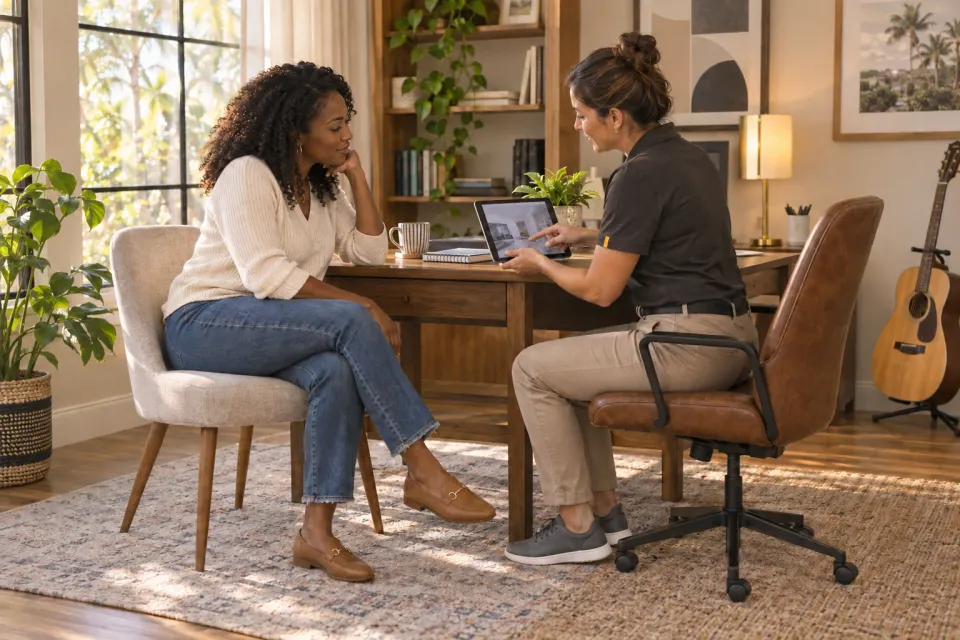
Start with the moisture concern and the question a test would answer. Mold air sampling is not a general certificate of a healthy home.
Start with what you have noticed
A stain after a leak, a recurring musty odor or a request from another professional are useful details to share. Record where and when you noticed the concern, whether water is still entering, and any previous repairs. These observations help define the assessment; they do not identify a species or establish the full extent of a problem.
Tell the team whether you are buying, living in or preparing to sell the property. An inspection deadline and permission to access the affected area matter when planning the next step.
When might sampling help?
EPA says sampling is usually unnecessary when mold growth is visible. If sampling is proposed, ask the assessor what decision it will inform and how results will be interpreted. There are no federal airborne mold limits against which to certify a home.
Clarify the proposed locations, sample type, laboratory work, provider qualifications, cost and delivery schedule before agreeing to testing. A quoted sample count should follow a defined question; it should not be the reason for testing.
Read the result with the assessment
CDC/NIOSH cautions that brief air samples and spore counts cannot be translated into health-risk levels. A result also does not describe every room or every condition over time. Discuss its limits with the assessor alongside visible conditions and the moisture history.
Ask which observations are confirmed, which remain uncertain, and what follow-up is recommended. Medical concerns belong with a healthcare professional; a building assessment does not diagnose symptoms.
Arrange the next step
DAMNGOOD’s Mold Assessment page is the starting point for a mold or moisture concern. For another defined air-testing request, use Indoor Air Quality. Send the property address and your question so the team can confirm availability, the qualified provider and the proposed scope.
A useful next step is an agreed assessment that answers your question, with clear documentation and a plan for any further evaluation. It is not a promise that testing will prove the whole property safe.