KNOW THE HOME. PLAN YOUR NEXT STEP.
Thermal Imaging and Moisture: Useful Clues, Clear Limits
Thermal images can help identify areas for closer evaluation. They do not see through walls or establish the cause of a suspected leak on their own.
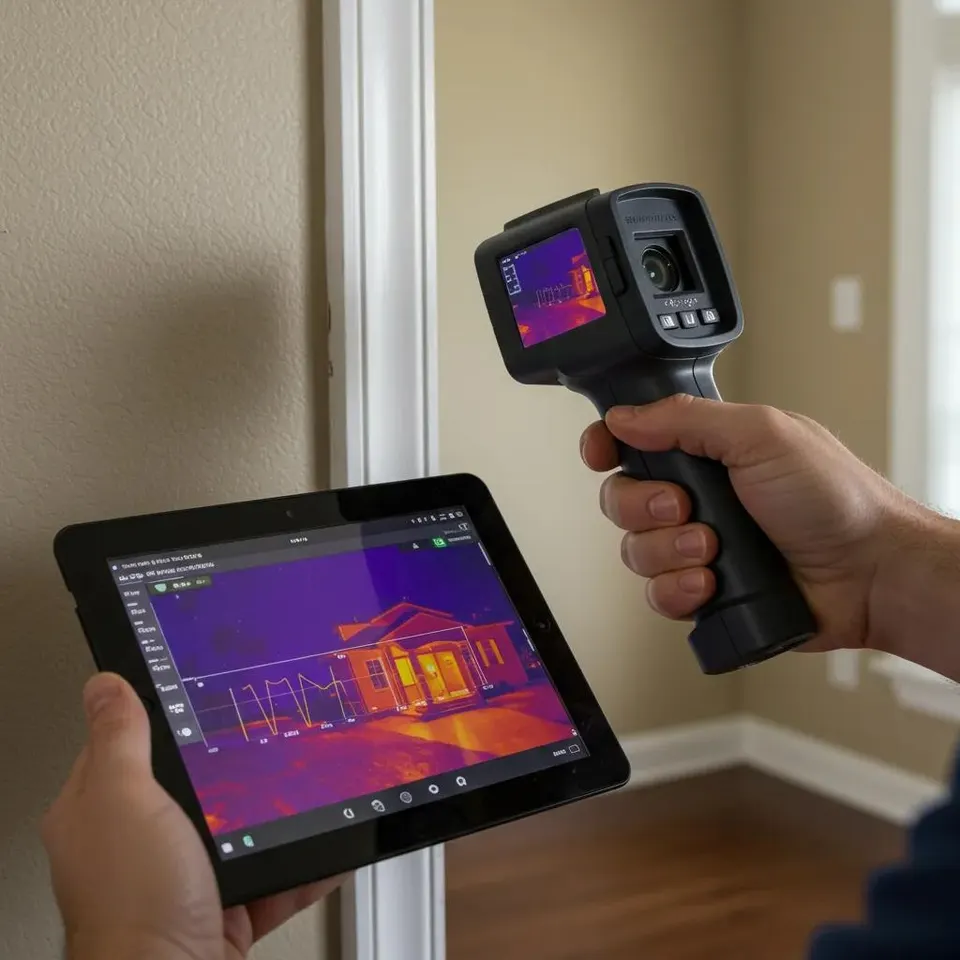
Thermal images can help identify areas for closer evaluation. They do not see through walls or establish the cause of a suspected leak on their own.
What the camera is showing
A thermal camera shows temperature patterns at visible surfaces. As FLIR explains, it does not look through an opaque wall. An unusual pattern can be a clue to investigate, rather than a picture of the concealed pipe, insulation or framing.
Temperature differences have several possible causes. Sun exposure, airflow and the conditions at the time affect what can be observed. A normal-looking image is not a guarantee that a concealed defect is absent.
From a clue to a useful finding
Ask what was seen, where it was recorded and what other evidence supports the observation. A moisture measurement or another appropriate evaluation may help clarify a concern; the report should distinguish observations from conclusions that require more work.
Photographs, the location of a stain and the history of a leak can make a follow-up conversation more useful. Avoid assuming that a color on a thermal image establishes mold, structural damage or a specific repair.
Know the agreed inspection scope
DAMNGOOD’s home inspection addresses visible, accessible systems and conditions. Any particular tool, specialist evaluation or additional testing must fit the agreed scope and access. This guide does not promise a separate thermal package, invasive opening or a fixed turnaround for every service.
If further investigation involves opening a surface or working on a system, obtain the property owner’s permission and arrange the appropriate qualified professional. A home inspection should not be treated as a repair contract.
Questions to bring to the team
Where did you notice water or staining? When does it recur? What repairs have already been attempted? What is your inspection or closing deadline? These details help the team understand the question before recommending the next step.
For a purchase, start with the Pre-Purchase Inspection scope. For suspected mold or a defined test, ask about the relevant assessment and confirm provider, cost and timing before booking.